Case study
CLS Surgical and AmDel Medical
Two sister medical device suppliers with one agency behind both. New websites, brands and product listings, lead generation, SEO and GEO, and sales up 22% year on year.

About CLS Surgical and AmDel Medical
CLS Surgical supplies medical devices to hospitals and therapy units across the UK and Ireland. It acts as the exclusive distributor for a number of manufacturers from around the world, and its range covers ventilation, cardiothoracic surgery, cardiac perfusion, radiology and infection control (CLS Surgical). Its customers include NHS trusts: in September 2025, for example, Royal Papworth Hospital awarded CLS a £59,964 contract to replace a high-frequency ventilator (Find a Tender).
AmDel Medical is its sister business. It supplies equipment to hospitals, pharmacists, healthcare providers and immunology nurses across the UK, with ranges for immunology and antibiotic therapy (subcutaneous delivery), intensive and critical care, and research, device and pharmaceutical work. AmDel describes itself as more than a distributor: it also develops products and trains the people who use them (AmDel Medical).
Both are small teams selling specialist equipment to some of the most demanding buyers in the country.
The brief
Selling medical devices is nothing like selling sofas. Nobody adds an ICU ventilator to a basket. A purchase goes past clinicians, procurement teams and often a formal tender, and it can take months. Marketing in that world has three jobs: get found by the right people, look credible when they arrive, and give the sales team something worth sending.
CLS and AmDel didn’t want a campaign bolted onto an old website. They wanted their whole digital presence rebuilt so that it worked as hard as their sales team. Castle took on the lot, from both websites and brands to the technology the team uses every day.
Two brands, one system
Castle rebuilt both websites and both brand identities as a matched pair. They share a structure and a way of working, but each has its own colour: blue for CLS, teal for AmDel. Each homepage carries a panel linking to the other, so a buyer who arrives at one business can see the other’s range in a click. More on how we approach this is on our web design and branding and design pages.
Both sites lead with areas of care. A perfusionist looks for perfusion equipment, not a supplier’s catalogue code, so CLS’s homepage sends people straight to their specialty, and AmDel’s does the same for immunology, critical care and research.
Product listings that do the explaining
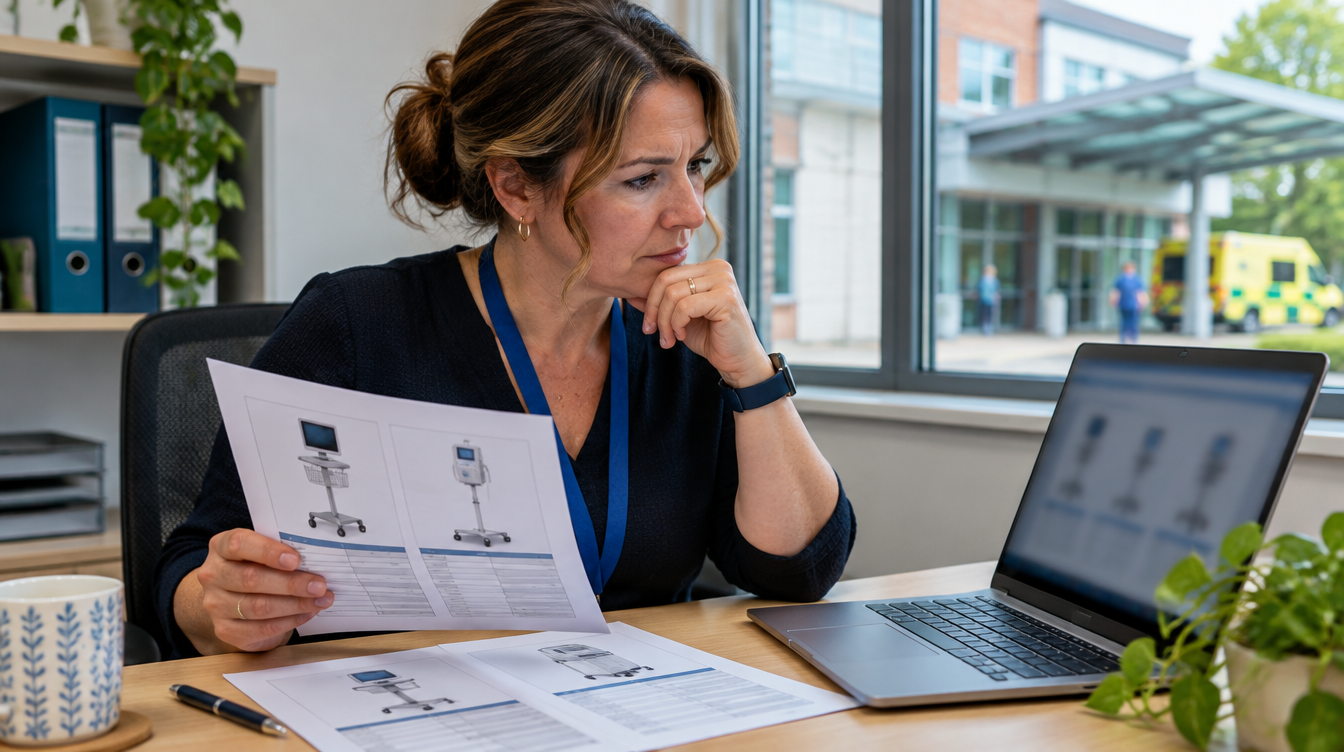
Castle rebuilt the product listings on both sites, written for the person who will actually use the device or sign off the purchase. The Panther 5 page, for example, explains in a line what an ICU team needs to know first: one machine for invasive ventilation, non-invasive ventilation and high-flow oxygen therapy, from neonates to adults.
Specialist buyers search for devices by name, model and clinical use. A page that answers their questions, with the specifications and a clear route to the sales team, is the page that gets found on Google, and increasingly the page an AI assistant reads when someone asks it which suppliers carry a particular device.
Lead generation on Google and Meta
Castle launched new Google Ads campaigns for both businesses in January 2026 and runs Meta campaigns alongside them. CLS uses Performance Max, Search and Demand Gen; AmDel uses Search.
CLS’s Google Ads budget has held at about £900 a month all year. In February to April it bought 3,145 visits to the website at about 87p each. From July to September the same budget bought 7,743 visits at about 35p each: two and a half times the traffic for the same money.
CLS Google Ads visits per month, 2026 (bars from 0 to 2,655; January from 10 Jan)
Clicks aren’t contracts, and some of that growth comes from Demand Gen, which finds people earlier in their research. What it does mean is far more clinicians and buyers seeing CLS and landing on its new product pages, with the sales team ready to pick up the conversation. This is the kind of work we do across lead generation.
Supporting the sales team
In a business that sells through relationships, the website is only half the job. Castle produces sales materials and resources for both teams, so a rep always has something credible to leave behind or send after a meeting.
The CLS website now carries a resources library and an events section, so customers can find product information and see where the team will be without having to ask.
Technology inside the business
Castle has also built technology inside the business to make the team more efficient. For a small team, hours saved on admin are hours spent with customers, and that matters more than any single campaign. More on this side of our work is on our AI automation page.
SEO and GEO
Castle runs SEO and GEO for both businesses. Clinicians and procurement teams research before they buy, and more of that research now starts with an AI assistant as well as Google. GEO (generative engine optimisation) is the work of making sure that when someone asks ChatGPT or Google’s AI Overviews about a device or a supplier, CLS and AmDel are in the answer. Our GEO page explains how we approach it.
The results
Sales and revenue are up 22% year on year.
CLS is selling its Panther ventilators at record levels, and its wider ventilation equipment is selling at record levels too. For a business whose customers buy through tenders and long evaluations, record sales of its flagship equipment say more than any click-through rate.
The marketing numbers point the same way. CLS’s monthly Google Ads visits went from 924 in February to 2,579 in September on a near-identical budget, and the average cost per click fell from 96p to 35p.
What other medical suppliers can take from this
- Organise by specialty, not by catalogue. Clinicians look for their area of care first.
- Treat sister brands as one system. A shared build with separate identities, linked to each other, makes each business look bigger than it is.
- Write product pages for the person who signs off. They’re what Google and AI assistants read, and what buyers forward to colleagues.
- Give the sales team something to send. Materials and resources do work between meetings.
- Look after the back office too. In a small team, admin time saved is time spent selling.
Questions about this case study
What did Castle do for CLS Surgical and AmDel Medical?
Everything digital. Castle built new websites and brands for both businesses and rebuilt their product listings. It runs their Google Ads, Meta, SEO and GEO, produces sales materials, and has built technology that makes the business more efficient.
What results have CLS and AmDel seen?
Sales and revenue are up 22% year on year, and CLS is selling its Panther ventilators and its wider ventilation equipment at record levels.
How has CLS’s Google Ads performed?
On a budget of about £900 a month, visits rose from 3,145 in February to April to 7,743 in July to September, and the average cost per click fell from 87p to 35p.
What is GEO and why does it matter for medical suppliers?
GEO, or generative engine optimisation, makes a business visible in answers from AI assistants such as ChatGPT and Google’s AI Overviews. More buyer research now starts there.
No deck, no retainer talk